
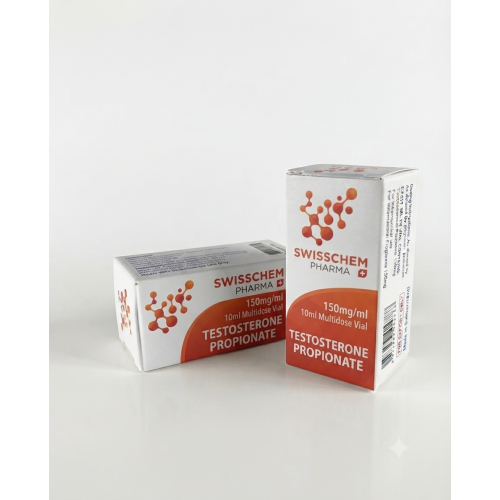
Testosterone Propionate 150mg SWISSCHEM PHARMA: A Comprehensive Guide to Hormonal Science, Product Identity, and Health Considerations
Exploring the characteristics of testosterone propionate, understanding product-label information, and recognising the importance of quality verification and medical supervision
Introduction
Testosterone Propionate 150mg SWISSCHEM PHARMA is a product name used in commercial listings for a testosterone-based preparation. It combines the name of a specific testosterone ester, a stated strength of 150mg, and a brand designation. Although these details provide a basic product identity, they do not independently confirm the actual ingredients, concentration, authenticity, or manufacturing quality of the preparation.
Testosterone is an important androgen hormone involved in reproductive health, muscle maintenance, bone development, red blood cell production, and several metabolic processes. Testosterone propionate is one of the esterified forms of this hormone. Its chemical structure influences how the preparation is released and processed by the body.
Understanding this product requires looking beyond its commercial name. This article examines the scientific background of testosterone propionate, the meaning of its ester structure, the limitations of product labelling, and the potential health considerations associated with testosterone exposure.
Understanding Testosterone Propionate
Testosterone propionate is a synthetic ester of testosterone. It consists of the testosterone molecule attached to a propionate ester group. This modification changes certain pharmaceutical properties of the compound, particularly its release characteristics when used in an injectable formulation.
After administration, enzymes in the body gradually separate the ester group from the testosterone molecule, allowing testosterone to become biologically available.
Compared with some longer-chain testosterone esters, testosterone propionate is generally associated with a shorter duration of release. However, its actual behaviour can depend on the formulation and individual physiological factors.
It is important to distinguish between the active hormone and its ester. The ester influences how the compound behaves in the body, while testosterone is responsible for its androgenic and anabolic biological activity.
The Biological Functions of Testosterone
Testosterone plays a significant role in several systems throughout the human body. Although it is commonly associated with male reproductive development, its functions extend well beyond that area.
Its biological activities include:
- Supporting the development and maintenance of skeletal muscle.
- Contributing to bone density and structural strength.
- Participating in normal reproductive and sexual function.
- Supporting red blood cell production.
- Influencing energy metabolism and body composition.
- Contributing to mood, motivation, and general well-being.
Testosterone is produced naturally, primarily in the testes in males, with smaller amounts produced by the adrenal glands. In females, smaller quantities are produced by the ovaries and adrenal glands.
Hormone levels naturally fluctuate according to age, health, sleep, nutrition, medication use, and other individual factors. Therefore, a person's symptoms alone cannot establish whether a testosterone deficiency exists. Appropriate medical assessment and laboratory testing are necessary.
Understanding the 150mg Product Label
The figure 150mg forms part of the commercial description of Testosterone Propionate 150mg SWISSCHEM PHARMA. It represents the strength stated in the product name or associated labelling.
However, interpreting this figure requires attention to several details. A product description should ideally clarify the measurement basis, declared concentration, quantity of active compound, and complete ingredient information.
The following points are particularly important:
- Whether the stated amount refers to testosterone propionate or another measurement.
- Whether the concentration is expressed per millilitre or per container.
- Whether the complete ingredient list is available.
- Whether the declared concentration has been independently verified.
- Whether the actual contents correspond to the packaging information.
A printed strength is not the same as independent laboratory confirmation. Products from unregulated sources may contain inaccurate concentrations, undeclared substances, impurities, or ingredients that differ from their labels.
Consequently, the number displayed in a product name should not be treated as proof of authenticity, purity, or safety.
SWISSCHEM PHARMA and Product Identification
SWISSCHEM PHARMA is the brand designation associated with this commercial product listing. Brand names and packaging are useful for identifying how a preparation is presented in the marketplace, but they cannot independently establish its pharmaceutical quality.
A responsible assessment requires reliable supporting documentation. Relevant information may include:
- Clearly identified manufacturing details.
- A complete declaration of ingredients.
- Batch numbers and traceability information.
- Appropriate quality-control records.
- Independent laboratory analysis.
- Evidence of compliance with applicable regulations.
The appearance of a product, its online description, or the presence of a brand name should not be considered sufficient evidence of verified pharmaceutical standards.
Consumers should also recognise that regulatory requirements differ between countries. A product's availability through an online seller does not automatically mean it is authorised for medical use.
Testosterone Propionate and Hormonal Regulation
Natural testosterone production is controlled through the hypothalamic-pituitary-gonadal axis. This complex hormonal communication system helps maintain the body's endocrine balance.
The hypothalamus releases gonadotropin-releasing hormone (GnRH), which signals the pituitary gland to produce luteinising hormone (LH) and follicle-stimulating hormone (FSH).
LH stimulates testosterone production in the testes, while FSH contributes to sperm production. Together, these hormones support normal reproductive and endocrine functions.
When testosterone is introduced from an external source, the body may reduce its own hormonal signals through a negative feedback mechanism. This can suppress natural testosterone production and interfere with normal reproductive activity.
The degree and duration of suppression vary between individuals. Hormonal recovery is not guaranteed to occur immediately after external exposure ends and may require medical evaluation.
Potential Health Risks and Side Effects
Testosterone exposure can affect multiple biological systems. The nature and severity of possible complications depend on individual health, exposure, product composition, and other medical factors.
Cardiovascular health: Testosterone exposure may influence cholesterol levels, blood pressure, and red blood cell production. Changes in these factors can contribute to cardiovascular complications.
Hormonal imbalance: External testosterone can suppress the body's natural hormone production and disrupt normal endocrine regulation.
Reproductive health: Reduced sperm production, testicular shrinkage, and impaired fertility are possible consequences of hormonal suppression.
Skin and hair: Acne, oily skin, and accelerated hair loss may occur, particularly in individuals with a genetic predisposition.
Emotional well-being: Some individuals may experience irritability, mood changes, sleep disturbances, or other behavioural and emotional effects.
Fluid retention: Changes in fluid balance and swelling may occur in some individuals.
Other medical concerns: Breast tissue enlargement in males and worsening of certain existing health conditions are also possible.
The absence of noticeable symptoms does not necessarily mean that hormone exposure is free from complications.
Why Product Quality and Verification Matter
Quality verification is an important consideration for any hormone-related preparation, especially when it is obtained through online commercial channels.
A produ
Testosterone Propionate 150mg SWISSCHEM PHARMA
- Brand: SWISSCHEM
- Product Code: Testosterone
- Availability: In Stock
-
$48.16