
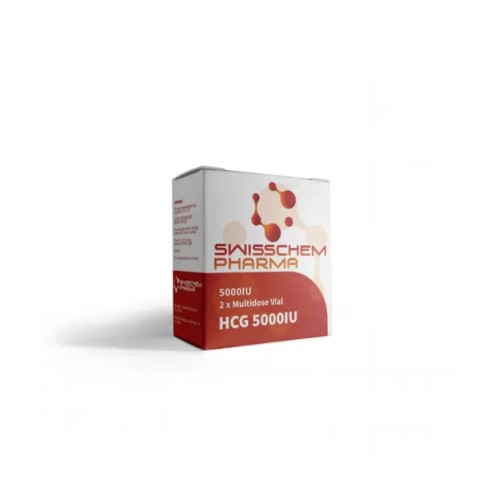
HCG 5000 IU SWISSCHEM PHARMA: Product Overview, Medical Applications, and Safety Information
Introduction to HCG 5000 IU SWISSCHEM PHARMA
HCG 5000 IU SWISSCHEM PHARMA Poland is a product name associated with human chorionic gonadotropin (HCG); a hormone-related medicine used in specific medical settings. HCG is a glycoprotein hormone that interacts with the body's reproductive hormone system. Its clinical applications depend on the patient's condition, age, medical history, and the treatment plan established by a qualified healthcare professional.
The designation “5000 IU” refers to the stated product strength in international units. The exact formulation, manufacturer information, presentation, storage requirements, and approved indications should always be confirmed from the original packaging and official product documentation. Brand names and product presentations alone are not sufficient to establish authenticity or regulatory approval.
Understanding Human Chorionic Gonadotropin (HCG)
Human chorionic gonadotropin is a hormone naturally produced during pregnancy, primarily by cells that develop into the placenta. In medicine, HCG is used because its biological activity resembles that of luteinizing hormone (LH), a hormone involved in reproductive function.
HCG can stimulate particular hormonal processes by acting on receptors associated with LH. In appropriately selected patients, this activity may support ovulation or stimulate testosterone production by the testes. Its effects vary according to the person's physiology and the underlying condition being treated.
Although HCG has several established medical applications, it is not suitable for everyone. Treatment decisions require an accurate diagnosis, a review of contraindications, and appropriate clinical monitoring.
Product Identity and Strength Information
HCG 5000 IU SWISSCHEM PHARMA combines a hormone-related active ingredient designation with a stated potency and brand name. Each of these details serves a different purpose when identifying a medicine.
- Product name: HCG 5000 IU SWISSCHEM PHARMA
- Active ingredient: Human chorionic gonadotropin, subject to confirmation from the product label
- Stated strength: 5000 international units (IU)
- Product category: Hormonal medicine
- Formulation and presentation: Must be verified using the original packaging and official documentation
- Route of administration: Depends on the verified formulation and its approved instructions
International units express biological activity rather than mass in milligrams. Therefore, IU should not be interpreted as a direct equivalent of milligrams or micrograms. The stated strength also does not determine an individual's prescribed dose.
Medical Applications of HCG
Support for Ovulation in Selected Patients
One established medical application of HCG is the management of certain fertility conditions. Under specialist supervision, HCG may be used to trigger the final stages of egg maturation and ovulation in appropriately selected patients receiving fertility treatment.
The timing of administration is important because it is coordinated with the individual's treatment cycle and clinical findings. Fertility specialists may use ultrasound examinations and hormone measurements to evaluate ovarian response and determine whether treatment is appropriate.
HCG is not a universal fertility solution. Its suitability depends on the cause of infertility, ovarian function, other medicines being used, and the overall treatment strategy.
Male Reproductive Health
HCG may be prescribed in certain male reproductive or endocrine conditions. By acting on receptors normally stimulated by luteinizing hormone, it can encourage the testes to produce testosterone in specific clinical circumstances.
In selected patients, specialists may consider HCG when evaluating particular forms of hypogonadism or reproductive hormone dysfunction. The appropriate treatment depends on the underlying diagnosis and the individual's hormonal profile.
HCG should not be considered a general-purpose treatment for low energy, reduced athletic performance, or every case of low testosterone. A medical assessment is necessary to determine the cause of symptoms and whether hormone treatment is justified.
Specialist-Directed Hormonal Treatment
The reproductive endocrine system involves several interacting hormones, including LH, follicle-stimulating hormone (FSH), testosterone, and estrogen. HCG influences part of this system, but its effects depend on the patient's existing hormonal activity and overall health.
For this reason, clinicians may evaluate symptoms, medical history, laboratory results, and other relevant factors before prescribing it. Follow-up assessments help determine whether the intended clinical response is occurring and whether adverse effects require attention.
How HCG Works in the Body
HCG works primarily by interacting with luteinizing hormone and HCG receptors. In the ovaries, this activity can contribute to the final maturation of ovarian follicles and the ovulatory process. In the testes, receptor activation can stimulate testosterone production by Leydig cells.
These effects explain why HCG has applications in selected fertility and endocrine treatments. However, the hormone does not correct every underlying reproductive disorder, and its use does not guarantee pregnancy, improved fertility, or a particular hormonal outcome.
Clinical response varies among individuals. The treatment plan must therefore be based on medical evidence and the patient's specific circumstances rather than on the product strength alone.
Important Safety Considerations
HCG is a hormone-related medicine that can cause adverse effects and may be unsuitable for people with particular medical conditions. Its use should be supervised by a qualified healthcare professional familiar with reproductive endocrinology or the relevant clinical specialty.
Potential adverse effects vary according to the patient, indication, formulation, and treatment protocol. They may include headache, abdominal discomfort, injection-site reactions, fluid retention, or changes associated with altered hormone activity.
In fertility treatment, HCG can contribute to ovarian hyperstimulation syndrome (OHSS), a potentially serious complication involving an excessive ovarian response. Symptoms such as severe abdominal pain, rapidly increasing abdominal swelling, persistent vomiting, sudden weight gain, or difficulty breathing require urgent medical assessment.
In male patients, hormonal changes may contribute to breast tenderness or enlargement, fluid retention, acne, or other adverse effects. Children receiving specialist treatment may require additional monitoring because hormone-related effects depend on age and the condition being treated.
The risk profile is not identical for every patient. The prescribing clinician should explain relevant warning signs and the monitoring plan before treatment begins.
Contraindications and Medical Assessment
Before HCG treatment is considered, a healthcare professional should review the patient's medical history, current medicines, allergies, and relevant laboratory findings. Certain hormone-sensitive conditions or other medical circumstances may make treatment inappropriate or require particular caution.
Patients undergoing fertility treatment may need assessment of ovarian response and other factors associated with OHSS. Male patients may require evaluation of reproductive hormones and the underlying cause of their symptoms.
Patients should disclose all prescription medicines, non-prescription products, and hormone-related treatments they use. Combining hormonal medicines without clinical supervision can complicate treatment and increase the possibility of adverse effects.
HCG should not be used for self-directed bodybuilding, unsupervised hormone manipulation, or weight-loss purposes. Its established medical role is distinct from unsupported claims about muscle development, fat reduction, or general performance enhancement.
Administration, Storage, and Handling
The correct administration method depends on the specific formulation and its approved product instructions. The original packaging and official leaflet should be consulted to establish whether the product requires reconstitution, what diluent is appropriate, and how it must be administered.
If the product is supplied as a powder for preparation, sterile handling and the correct preparation procedure are essential. Patients should never improvise a dilution method, substitute a diluent, or use a prepared solution beyond its specified storage period.
Storage requirements may depend on whether the product is unopened, has been reconstituted, or is supplied in a particular formulation. Temperature limits, protection from light, and any restrictions after preparation should be verified from the official instructions.
Medicines should be kept away from children and should not be used when packaging is damaged, the product appears abnormal, or the expiry date has passed. Used needles and other sharps must be discarded in an appropriate sharps container.
Product Authenticity and Documentation
When assessing HCG 5000 IU SWISSCHEM PHARMA, the product name should be checked against the original packaging, batch details, expiry date, manufacturer information, and accompanying documentation. These checks help identify inconsistencies, but packaging alone cannot conclusively establish authenticity.
The manufacturer's identity and regulatory status should be independently verified through reliable official sources where possible. The availability of a product online does not automatically establish that it is authorised for sale or use in a particular country.
Patients and healthcare professionals should also confirm that the stated ingredient, potency, dosage form, and instructions match the relevant official product information. If any details are unclear or inconsistent, a pharmacist or other qualified healthcare professional should be consulted before the product is used.
Responsible Use and Clinical Monitoring
Successful hormone treatment requires more than selecting a product with a particular stated strength. A suitable diagnosis, individualised treatment planning, adherence to approved instructions, and appropriate follow-up are all important components of safe care.
Depending on the indication, monitoring may include hormone measurements, clinical examinations, fertility assessments, or other investigations selected by the treating specialist. The frequency and type of monitoring should be determined by the patient's condition and response to treatment.
Patients should report new or worsening symptoms promptly and should not independently increase, reduce, or repeat treatment. If a dose is missed or preparation instructions are unclear, advice should be obtained from the prescribing clinician or pharmacist.
Conclusion
HCG 5000 IU SWISSCHEM PHARMA Online Poland is a product designation associated with human chorionic gonadotropin, a hormone-related medicine with established applications in selected fertility and endocrine conditions. HCG acts through receptors associated with luteinizing hormone and can influence ovulatory processes and testosterone production in appropriately selected patients.
The stated strength, product presentation, formulation, and manufacturer details must be verified using reliable documentation. Because HCG can cause adverse effects and requires indication-specific monitoring, its use should be based on a qualified medical assessment rather than general product claims.
Responsible handling, verified product information, professional guidance, and appropriate follow-up remain essential considerations whenever HCG is prescribed or evaluated for clinical use.
HCG 5000iu SWISSCHEM PHARMA
- Brand: SWISSPHARMA
- Product Code: HCG
- Availability: In Stock
-
$43.68