
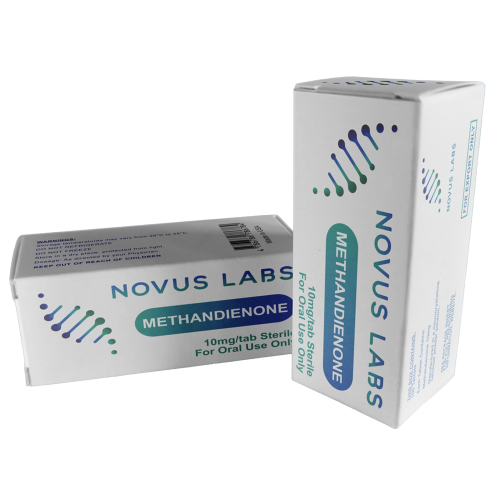
Understanding Methandienone 10mg (Novus Labs): An Overview of Anabolic Science, Chemistry, and Performance Dynamics
Methandienone, widely recognized historically by its original brand name Dianabol (or D-bol), represents one of the most prominent oral anabolic-androgenic steroids (AAS) in the history of pharmacology. Developed in the mid-20th century, the compound was specifically engineered to synthesize the anabolic benefits of testosterone while dampening some of its inherent androgenic liabilities. When presented in a 10mg oral tablet formulation by specialized pharmaceutical developers like Novus Labs, the compound remains a central subject of study regarding muscle protein synthesis, nitrogen retention, and androgen receptor affinity.
The Chemical Architecture and Pharmacokinetics of Methandienone
To appreciate how Methandienone 10mg functions within human physiology, it is essential to examine its chemical modification relative to endogenous testosterone.
Methandienone is chemically designated as 17α-methyl-17β-hydroxyandrosta-1,4-dien-3-one. It features two primary chemical modifications that fundamentally alter its metabolic trajectory:
- 17α-Alkylation (C17-alpha alkylation): A methyl group is added at carbon 17. This structural adjustment allows the oral tablet to survive the first-pass metabolism through the liver, ensuring a high level of bioavailability when ingested.
- Double Bond at Carbon 1 and 2: The addition of a double bond between carbon positions 1 and 2 alters the anabolic-to-androgenic ratio of the molecule. It significantly reduces the compound's affinity for binding to sex hormone-binding globulin (SHBG) compared to testosterone.
Because Methandienone does not bind strongly to SHBG, a higher concentration of the active hormone remains unbound in the bloodstream. This creates a rapid physiological onset, though it also gives the compound a relatively short terminal half-life of approximately 3 to 5 hours.
Primary Mechanisms of Action: How Methandienone Alters Cellular Physiology
At a cellular level, Methandienone functions by binding to intracellular androgen receptors present in skeletal muscle tissue, adipose tissue, and the central nervous system. Once bound, the steroid-receptor complex translocates into the cell nucleus to modulate gene transcription.
Enhanced Nitrogen Retention
Skeletal muscle tissue relies heavily on positive nitrogen balance to maintain an anabolic state. Methandienone exhibits a strong capability to decrease urinary nitrogen excretion. By retaining a higher percentage of dietary nitrogen inside muscle cells, the compound encourages an optimal environment for tissue repair and hypertrophy.
Accelerated Protein Synthesis
Through transcription modulation, Methandienone stimulates messenger RNA (mRNA) production, which directly speeds up the rate at which cells construct new proteins from available amino acids. This mechanism underpins the rapid gains in lean body mass traditionally associated with the compound.
Upregulation of Glycogenolysis
Methandienone significantly enhances glycogenolysis—the breakdown of stored glycogen into glucose-1-phosphate and glucose. This chemical reaction provides skeletal muscle tissue with readily available fuel during high-intensity metabolic demands, enhancing physical endurance, muscle fullness, and intra-workout pumps.
Dosing Profiles and Practical Context of 10mg Tablet Formulations
The 10mg tablet formulation, such as the one offered under the Novus Labs label, provides a flexible dosing platform. Because Methandienone possesses high potency per milligram, granular 10mg increments allow users or researchers to monitor response curves and manage plasma concentration spikes throughout the day.
- Plasma Stabilization: Due to the short 3 to 5-hour half-life, daily dosages are frequently split across equal time intervals (e.g., every 4 to 6 hours) to prevent abrupt peaks and troughs in serum hormone levels.
- Duration Considerations: Oral 17-alpha alkylated steroids exert measurable metabolic strain on hepatic tissues. As a result, administration cycles are historically constrained to short windows—typically 4 to 6 weeks—to mitigate prolonged physiological stress.
Physiological Implications and Endocrine Effects
While Methandienone offers powerful anabolic activity, its hormonal interactions induce several distinct metabolic reactions across various physiological systems.
Estrogen Conversion and Fluid Dynamics
Methandienone converts via the aromatase enzyme into 17α-methylestradiol, a bioactive form of estrogen that is resistant to metabolic breakdown. Consequently, the compound can induce noticeable estrogenic activity, including intracellular and extracellular water retention, elevated systemic blood pressure due to fluid volume expansion, and the potential development of gynecomastia if estrogen receptor activation remains unchecked.
Endogenous Testosterone Suppression
Like all exogenous androgenic agents, Methandienone initiates negative feedback on the Hypothalamic-Pituitary-Gonadal (HPG) axis. By signaling to the hypothalamus and pituitary gland that adequate circulating hormones are present, the body halts gonadotropin production (LH and FSH), leading to a rapid shutdown of natural endogenous testosterone production.
Hepatic Metabolism and Enzymes
The 17-alpha alkylation that grants Methandienone its oral viability simultaneously burdens hepatocytes (liver cells). Regular biomarker testing typically reveals temporary elevations in liver enzymes, such as Alanine Aminotransferase (ALT) and Aspartate Aminotransferase (AST).
Risk Mitigation, Monitoring, and Health Considerations
Understanding the physiological impact of Methandienone 10mg necessitates an overview of harm reduction strategies, biomarker tracking, and recovery protocols.
Cardiovascular System
Methandienone negatively affects systemic lipid profiles by decreasing HDL (good cholesterol) and increasing LDL (bad cholesterol). Combined with fluid retention and elevated blood pressure, cardiovascular stress is a primary concern. Monitoring lipid panels regularly, tracking blood pressure, and prioritizing clean cardiovascular nutrition are standard harm-reduction practices.
Hepatic Health
Due to the stress placed on liver tissue, limiting administration duration strictly to 4–6 weeks is critical to prevent long-term cholestatic stress. Avoiding alcohol and other hepatotoxic compounds, alongside utilizing targeted liver-support supplements, helps manage enzyme elevations during use.
Hormonal Recovery
Because endogenous testosterone production is suppressed rapidly, initiating a structured Post-Cycle Therapy (PCT) protocol is necessary following discontinuation. The use of Selective Estrogen Receptor Modulators (SERMs), such as Tamoxifen or Clomiphene, helps stimulate the pituitary gland to release LH and FSH, encouraging the testes to resume natural testosterone synthesis.
Summary Perspective on Novus Labs Methandienone 10mg
Methandienone 10mg remains one of the most historically studied oral compounds in performance pharmacology. Its dual modifications—the 17α-methyl group and the 1,2-double bond—endow it with high oral bioavailability, potent anabolic activity, and a rapid onset of action through nitrogen retention and elevated protein synthesis. However, these distinct chemical traits also require careful evaluation of its cardiovascular, hepatic, and hormonal trade-offs. Precise dosing protocols, brief utilization windows, and comprehensive post-cycle recovery strategies remain integral to managing its profile effectively.
Methandienone 10mg tabs. NOVUS LABS
- Brand: NOVUS LABS
- Product Code: Methandienone
- Availability: In Stock
-
$50.40