
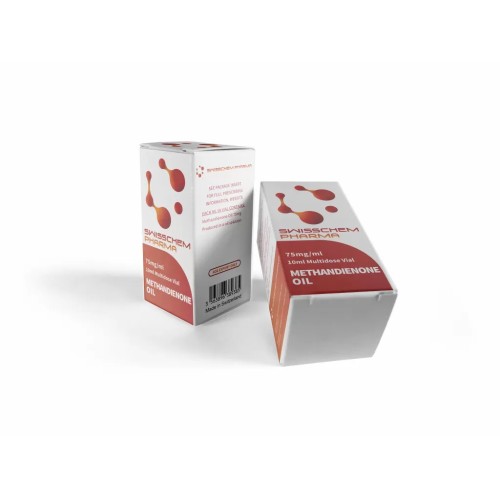
Methandienone Oil 75 mg by SwissChem Pharma: Product Literacy and Risk Guide
A vial marketed as Methandienone Oil 75 mg by SwissChem Pharma raises two separate questions: what the label claims the product contains, and whether that claim can be trusted. The name suggests an oil-based formulation of methandienone, an anabolic-androgenic steroid also known as methandrostenolone or, commonly, Dianabol. But a brand name and concentration printed on packaging do not establish the product’s identity, quality, or safety.
This guide takes a consumer-safety approach. It does not provide instructions for using, dosing, or injecting anabolic steroids.
Start with the formulation question
Methandienone is widely known as an oral anabolic steroid. A product described as “oil” or marketed for injection is therefore a reason to be especially cautious—not proof that it is necessarily fake, but a detail that deserves verification. The label may refer to a specific formulation, yet only reliable manufacturing and regulatory documentation can establish what is actually in the container.
The number “75 mg” is also incomplete without clear, trustworthy information about what it measures. It might be presented as a concentration, but packaging conventions and seller descriptions can be ambiguous. It should not be treated as a recommended amount or evidence that the product is suitable for any person.
Do not try to identify or authenticate a product by its colour, thickness, smell, packaging, or online photographs. These checks cannot determine the active ingredient, concentration, sterility, or presence of contaminants.
What methandienone is
Methandienone is a synthetic anabolic-androgenic steroid. Like other drugs in this class, it can affect androgen pathways and the body’s natural hormone regulation. It has been used medically in some settings in the past, but a product sold online or through an unregulated seller is not equivalent to a prescribed, quality-controlled medicine.
In fitness communities, methandienone is often discussed in connection with changes in body weight, strength, and muscle size. Such claims are not guarantees. Changes can reflect several factors, and anecdotes cannot predict an individual’s response or rule out harm. Rapid changes in weight, for example, may not represent lasting gains in muscle tissue.
Why an “oil” label deserves scrutiny
A product’s route of administration matters. If a medicine is intended for injection, sterility, formulation, and manufacturing controls are essential. An injectable product that is contaminated or incorrectly prepared can cause serious harm even apart from the drug’s effects. A label alone cannot show that these standards were met.
Similarly, an oil-based description does not mean the preparation is safer, more effective, or easier for the body to tolerate. If a product’s route or formulation is unclear, do not infer how it should be used from the packaging or seller’s instructions. Ask a licensed pharmacist or clinician to assess the label and source.
Health risks to understand
Anabolic steroids can affect multiple organs and systems. Methandienone is associated with particular concern for the liver, and liver injury may not be obvious at first. Yellowing of the skin or eyes, dark urine, persistent nausea, unusual itching, or pain in the upper abdomen warrant prompt medical attention.
Steroid exposure can also adversely affect cardiovascular health, including blood pressure and cholesterol. These changes may occur without clear symptoms. Other possible effects include acne, oily skin, hair loss in people with a genetic predisposition, mood changes, irritability, and sleep problems.
Hormonal effects can occur in people of any sex. In men, steroid use may suppress natural testosterone production and sperm production, with possible effects on fertility, testicular size, sexual function, and mood—particularly after stopping. In women, androgen exposure can cause menstrual disruption, increased facial or body hair, acne, voice deepening, or clitoral enlargement. Some changes, including voice deepening, may be irreversible. Use during pregnancy may harm fetal development.
Adolescents face additional concerns because anabolic steroids can interfere with normal development. Someone under 18 should not use a non-prescribed product and should speak with a healthcare professional or trusted adult if exposed.
These risks are not reliably predicted by a product’s stated strength. A person’s health history, other medicines or substances, duration of exposure, and the product’s actual contents all matter. Combining drugs can make effects more difficult to anticipate.
The brand and supply chain
“SwissChem Pharma” on a label is not independent proof that a product was made in Switzerland, manufactured under recognized standards, or tested by an accredited laboratory. Unregulated markets can include counterfeit, mislabeled, contaminated, or improperly stored products. Seller-provided claims such as “pharmaceutical grade,” “lab tested,” or “authentic” should not be assumed reliable without verifiable evidence from a relevant regulator or authorized pharmacy.
A certificate or batch number may look convincing but still fail to establish that the specific vial was tested, that the testing was valid, or that the product stayed protected during shipping and storage. When a medicine is not obtained through a regulated pharmacy, the uncertainty may be impossible for a consumer to resolve.
If you already have the product
Do not take or inject a product with uncertain identity or unclear instructions. Keep it away from children and pets, and avoid sharing it with anyone. A pharmacist or clinician may be able to review the packaging and advise you about safer next steps. If you have already used it, give the healthcare professional the exact name on the label, where it came from, when exposure occurred, and any other substances or medicines involved.
Avoid trying to counteract possible effects with supplements, prescription medicines obtained from someone else, or online “recovery” plans. These approaches can introduce further risks and may delay appropriate care. A clinician can decide whether evaluation or monitoring is appropriate based on your situation.
Seek urgent medical help for chest pain, difficulty breathing, fainting, severe headache, sudden weakness, yellow skin or eyes, severe abdominal pain, or a rapidly worsening injection-site reaction. Fever, spreading redness, marked swelling, or increasing pain after an injection can signal infection. If you experience thoughts of self-harm, contact emergency services or a crisis-support service in your area.
A safer decision framework
Before considering any hormone or performance-enhancing drug, clarify the goal: a health symptom, a training plateau, body composition, or competitive performance. A qualified healthcare professional can discuss safer options and assess whether a medical condition needs attention. If you compete in sport, check the rules of your governing organization; anabolic steroids are prohibited in many settings.
Laws differ across countries and regions, so possession, sale, importation, or use may also have legal consequences. Advice from a seller or online forum is not a substitute for local legal guidance or medical care.
Bottom line
Methandienone Oil 75 mg by SwissChem Pharma should be treated as an unverified product unless its identity, formulation, and quality can be confirmed through a legitimate regulated source. An “oil” label does not establish that an injectable preparation is appropriate or sterile, and the stated 75 mg is not a personal-use recommendation. Methandienone can carry significant liver, cardiovascular, hormonal, reproductive, and psychological risks. If you are considering it or have already been exposed, speak with a qualified healthcare professional rather than relying on packaging or seller assurances.
Methandienone OIL 75mg SWISSCHEM PHARMA
- Brand: SWISSCHEM
- Product Code: Methandienone
- Availability: In Stock
-
$58.24