
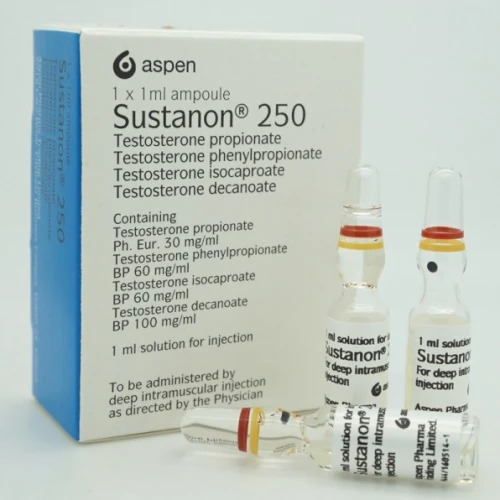
Sustanon® 250 – 3 Ampoules (Aspen): Product Overview
What It Is, How It Works, and Important Safety Information
Sustanon® 250 Online Poland is a prescription testosterone medicine supplied in a pack of three ampoules by Aspen, subject to local product availability and packaging. Each ampoule contains 1 mL of oily solution for injection. The medicine combines four testosterone esters, which are converted in the body into testosterone. It is used as testosterone replacement therapy for certain men whose symptoms and test results indicate a confirmed deficiency.
Sustanon is not intended for general wellbeing, bodybuilding, athletic performance, or age-related changes without a diagnosed medical need. Testosterone treatment requires clinical assessment, appropriate monitoring, and a prescription. Product details and approved uses can vary by country, so the package leaflet and local prescribing information should always be followed.
Composition and Presentation
Each 1 mL ampoule contains 250 mg of testosterone esters in total, equivalent to approximately 176 mg of testosterone. The four active ingredients are testosterone propionate, testosterone phenylpropionate, testosterone isocaproate, and testosterone decanoate. The different esters are released and processed at different rates, providing a longer-lasting effect than a single short-acting ester.
The solution is typically clear to pale yellow and oily. It is administered by injection into a muscle by a qualified healthcare professional. The ampoules are single-use containers; any unused medicine should be discarded according to professional guidance rather than saved for a later injection. Check the specific carton and leaflet for the listed excipients, storage instructions, expiry date, and local manufacturer or marketing-authorisation details.
Approved Use and Treatment Goals
Sustanon may be prescribed as testosterone replacement therapy for male hypogonadism when testosterone deficiency has been established through clinical evaluation and laboratory testing. Hypogonadism can occur when the testes do not produce enough testosterone or when the hormonal signalling system that regulates production is impaired.
Possible symptoms of low testosterone include reduced sexual desire, erectile difficulties, low energy, decreased muscle mass, reduced body hair, mood changes, and reduced bone density. These symptoms can have many other causes. A clinician should not diagnose testosterone deficiency from symptoms alone; assessment typically includes medical history, examination, and appropriately timed blood tests, sometimes repeated to confirm the result.
The aim of treatment is to restore testosterone to an appropriate range and improve symptoms while limiting risks. Treatment is individualised: the clinician considers the diagnosis, response, blood-test results, age, other health conditions, and adverse effects. Sustanon is not a treatment for infertility, and testosterone therapy can reduce sperm production. Men who may wish to father children should discuss fertility before starting.
How It Is Given
Sustanon is injected deeply into a muscle, usually by a healthcare professional. The injection schedule is determined by the prescriber and may be adjusted according to symptoms and measured testosterone levels. Do not use a schedule found online or change the timing or amount without medical advice. Giving injections more often or in larger amounts than prescribed can raise testosterone excessively and increase the risk of harm.
Because the solution is oily, the injection must be administered using appropriate technique. The healthcare professional will select a suitable injection site and take steps to reduce the risk of injecting into a blood vessel. Rarely, oily injections can cause an immediate reaction such as coughing, shortness of breath, chest discomfort, dizziness, sweating, or feeling unwell during or shortly after administration. Tell the clinician promptly if these symptoms occur.
If an appointment is missed, contact the clinic for instructions. Do not receive an extra injection to compensate unless the prescriber specifically directs you to do so.
Monitoring During Therapy
Before treatment, the prescriber reviews the diagnosis, medical history, medicines, and relevant risks. Baseline testing may include testosterone levels, a blood count, and prostate assessment where appropriate. Follow-up checks help confirm that treatment is effective and remains safe. Depending on individual circumstances, monitoring may include testosterone concentration, haemoglobin and haematocrit, prostate-related assessment, blood pressure, and evaluation of symptoms or side effects.
Attend scheduled appointments and report new or worsening symptoms. A rising red-blood-cell concentration, changes in prostate-related findings, or other significant concerns may lead the clinician to alter or stop treatment. Do not assume that feeling better means monitoring is no longer needed.
Side Effects and Risks
Possible adverse effects include acne, oily skin, changes in sexual interest, mood changes, headache, weight changes, fluid retention, and discomfort or reactions at the injection site. Testosterone can affect blood-cell production and may increase red blood cell levels. It can also influence blood pressure, cholesterol, sleep-related breathing problems, and prostate symptoms. Some people may develop breast tenderness or enlargement.
Seek urgent medical attention for signs of a severe allergic reaction, sudden breathing difficulty, chest pain, fainting, or painful swelling and redness in a leg. Contact a healthcare professional promptly for difficulty urinating, blood in the urine, persistent swelling, severe mood changes, or other worrying symptoms.
Testosterone therapy may worsen certain conditions or be unsuitable for some people. Tell the prescriber about prostate or breast cancer, suspected prostate problems, high red blood cell levels, severe heart, liver, or kidney disease, sleep apnoea, high blood pressure, blood clots, or significant urinary symptoms. The clinician will decide whether treatment is appropriate and what monitoring is needed.
Interactions and Practical Precautions
Provide a complete list of prescription medicines, over-the-counter products, and supplements. Testosterone may interact with medicines such as anticoagulants and some treatments for diabetes; it may also affect the response to corticosteroids. Do not start, stop, or change another medicine without checking with a healthcare professional.
Keep Sustanon in its original packaging and follow the storage conditions printed on the carton or leaflet. Keep it out of children’s reach. Do not use an ampoule if it is damaged, expired, or appears inconsistent with the product description. A pharmacist or clinician can advise on safe disposal.
Responsible Use
Sustanon 250 Online Poland is a prescription hormone medicine, not a general-purpose energy or muscle-building injection. Use it only for the indication and schedule prescribed to you, and obtain injections through a qualified healthcare professional. The three-ampoule pack describes the package quantity; it does not determine how long treatment should last. For personal advice, rely on your prescriber and the official leaflet supplied with your medicine.
Sustanon® 250 – 3 Ampullen (Aspen), Testosteron-Therapie-Injektion
- Hersteller ASPEN
- Artikelnr. Testosterone
- Verfügbarkeit Lagernd
-
$19,04
Verfügbare Optionen
Schnellsuche Sustanon® 250 – 3 Ampullen (Aspen), Testosteron-Therapie-Injektion